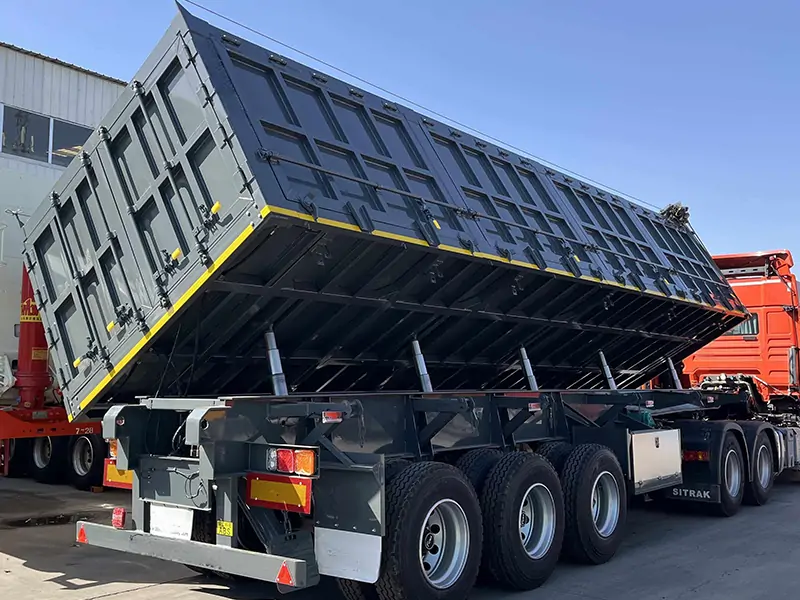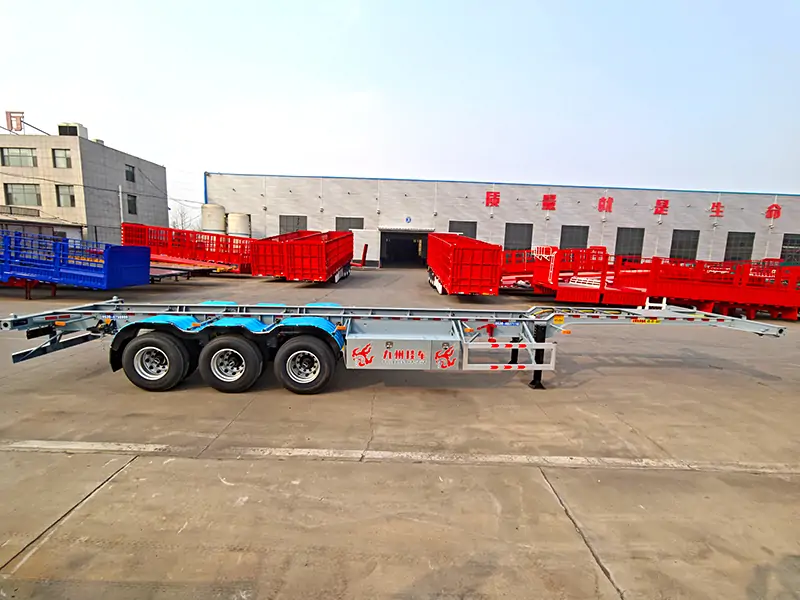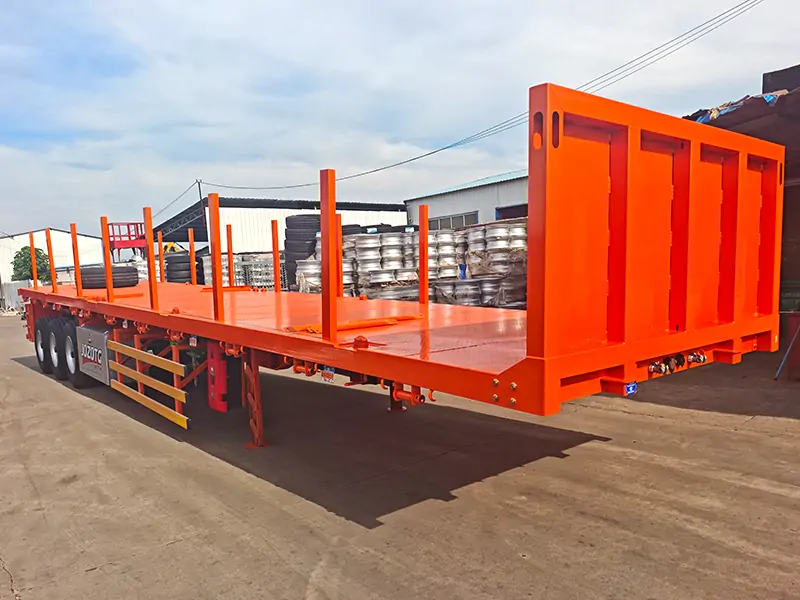
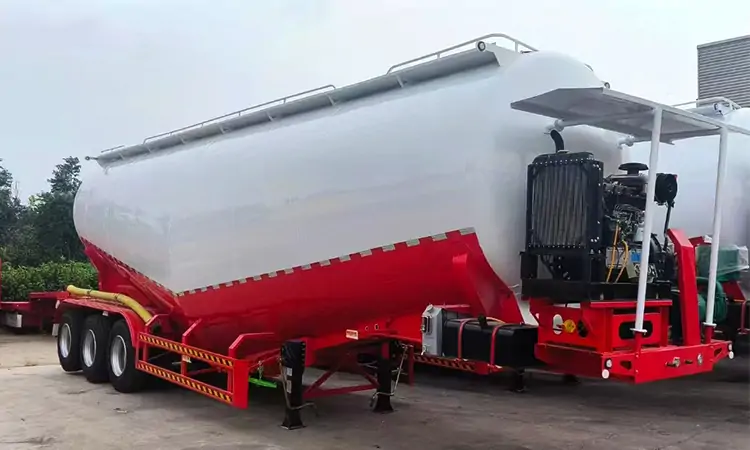
In modern industrial logistics, powder tank semi-trailers have emerged as indispensable specialized vehicles for transporting bulk dry materials with particle diameters ≤0.1mm, such as cement, flour, coal powder, and chemical granules. Their sealed罐体 (tank body) design and efficient pneumatic unloading systems have revolutionized traditional bulk material transportation, offering significant advantages in terms of safety, efficiency, and environmental protection.
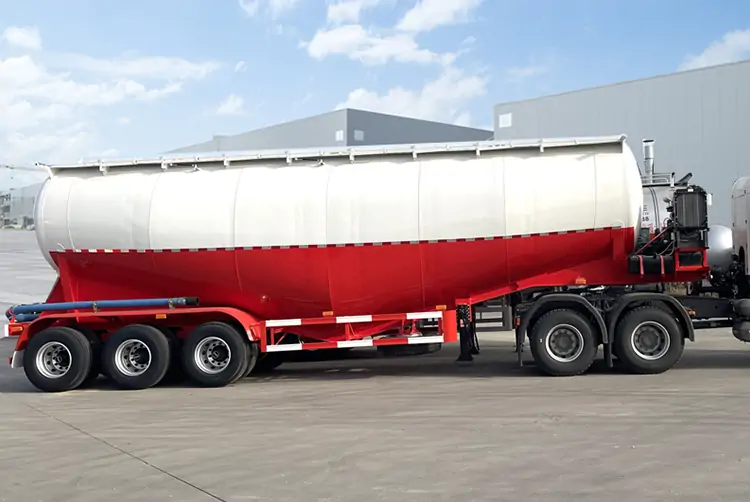
Core Applications Across Industries
- Construction Sector Dominance
The construction industry accounts for over 60% of powder tank semi-trailer demand globally. For instance, a standard 75m³ cement tanker can transport approximately 110 tons of cement per trip, eliminating the need for 2,200 50kg bags. This not only reduces packaging waste but also minimizes dust pollution during loading/unloading. China’s “Green Building Evaluation Standards” mandate that all large-scale infrastructure projects must use bulk cement transportation, directly driving market growth. - Agricultural & Food Processing Integration
In agriculture, these vehicles transport grain, flour, and feed additives with precision. A dual-compartment tanker with independent air chambers can simultaneously deliver wheat flour and soybean meal to different processing plants, maintaining product segregation. Food-grade stainless steel tankers with Teflon-coated interiors are now standard for edible powder transport, complying with HACCP and ISO 22000 certifications. - Chemical Industry Safety Solutions
For hazardous chemical powders like titanium dioxide or sodium bicarbonate, tankers feature explosion-proof electrical systems, grounding devices, and pressure relief valves. A 2024 case study showed that using specialized tankers reduced transport accidents by 78% compared to bagged transportation, with residual material rates dropping from 3.2% to 0.2% through optimized fluidized bed designs.
Technological Innovations Driving Efficiency
- Pneumatic Unloading Advancements
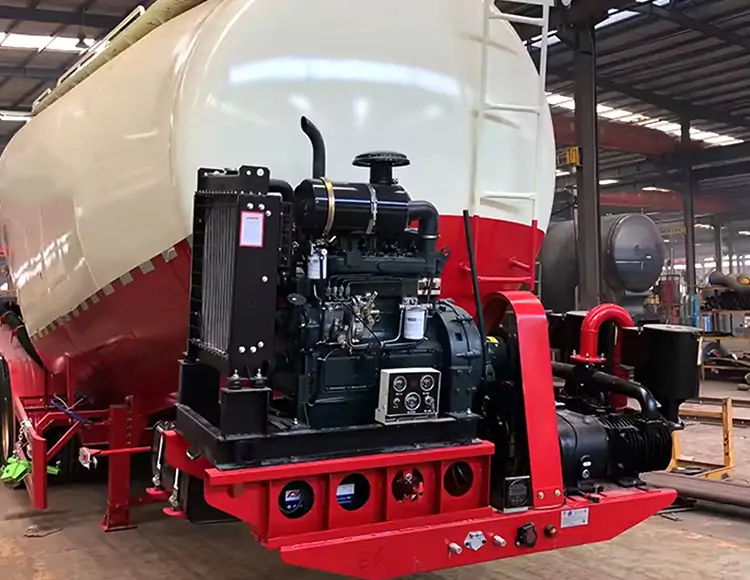
Modern tankers employ multi-stage air compression systems with pressure ranges from 0.147–0.294 MPa (medium-pressure models) to 1.177–3.532 MPa (high-pressure variants). The latest “Smart Flow” technology uses AI algorithms to adjust airflow based on material density, achieving unloading speeds of 1.4 tons/minute—30% faster than traditional models. - Lightweight Material Applications
Aluminum alloy frameworks and composite materials have reduced tare weights by 15% while maintaining structural integrity. A 2025 market report revealed that lightweight tankers now dominate the European market, with payload capacities increasing from 45 tons to 52 tons per trip. - IoT Integration for Real-Time Monitoring
Embedded sensors track temperature, humidity, and pressure during transit, transmitting data via 5G networks to cloud platforms. This enables predictive maintenance—a 2024 pilot project in Shandong Province reduced breakdown incidents by 41% through proactive component replacements.
Market Dynamics & Future Prospects
The global powder tank semi-trailer market is projected to grow at 6.8% CAGR through 2030, driven by:
- Regulatory Pressures: China’s “Dual Carbon” goals mandate a 30% reduction in logistics emissions by 2025, accelerating adoption of electric-powered tankers.
- Infrastructure Expansion: Southeast Asia’s US$1.2 trillion infrastructure plan will require 12,000 new tankers by 2027 for cement transport alone.
- Technological Convergence: Autonomous driving systems are being tested in closed-loop industrial parks, with trials showing a 22% increase in delivery efficiency.
However, challenges persist. The 2025 “Global Tanker Safety Report” highlighted that 34% of accidents stem from improper loading procedures, underscoring the need for standardized operator training programs. Additionally, rising raw material costs (steel prices up 18% YoY in 2025) are squeezing manufacturers’ margins, prompting a shift toward modular designs that allow partial component replacements.
Conclusion
Powder tank semi-trailers represent a paradigm shift in bulk material transportation, balancing operational efficiency with environmental sustainability. As industries demand safer, greener, and smarter logistics solutions, manufacturers are investing in R&D to create next-generation tankers with zero-emission powertrains and fully automated unloading systems. The future of industrial transport lies in these specialized vehicles, which continue to redefine the boundaries of efficiency in the global supply chain.