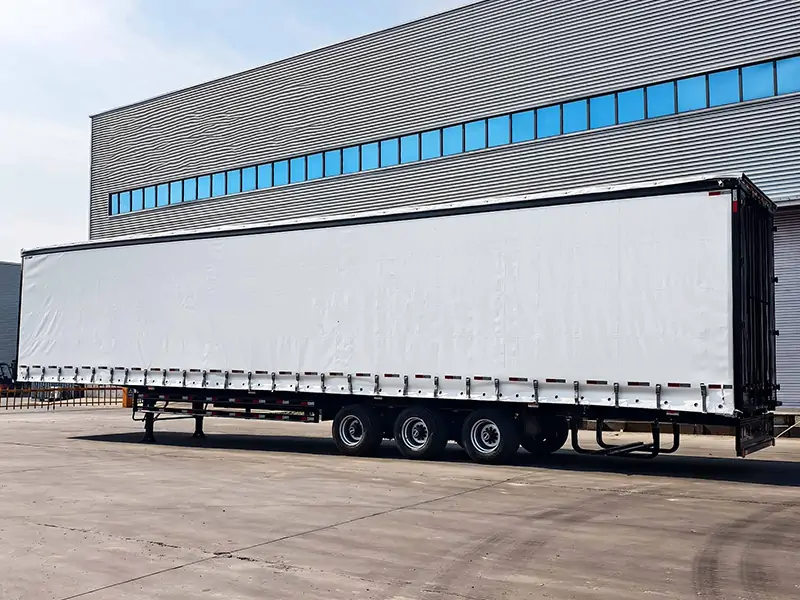
As Zimbabwe’s infrastructure modernization accelerates under the Harare-Beitbridge Corridor Project, demand for versatile side curtain box semi-trailers has surged. These trailers, combining rapid loading/unloading capabilities with weather protection, are ideal for transporting FMCG, automotive parts, and industrial equipment across Zimbabwe’s challenging terrain.
1. Regulatory Compliance: SADC Standards and Customs Protocols
Zimbabwe, as a SADC member, mandates adherence to regional vehicle standards (SABS/SANS 1563). Side curtain trailers must feature reinforced chassis (minimum 8mm steel) and anti-corrosion treatments for road salt resistance. Customs clearance requires pre-shipment inspection certificates (COMESA/SADC-approved) and real-time electronic cargo tracking (e-CTN) to avoid delays at Beitbridge Border Post.
2. Terrain-Adapted Engineering Solutions
Zimbabwe’s gravel roads and mountainous regions demand specialized designs. For instance, CIMC’s side curtain trailers integrate:
- Dual-line air brakes with emergency braking assist for steep gradients.
- Adjustable suspension systems (air or mechanical) to handle load shifts on uneven surfaces.
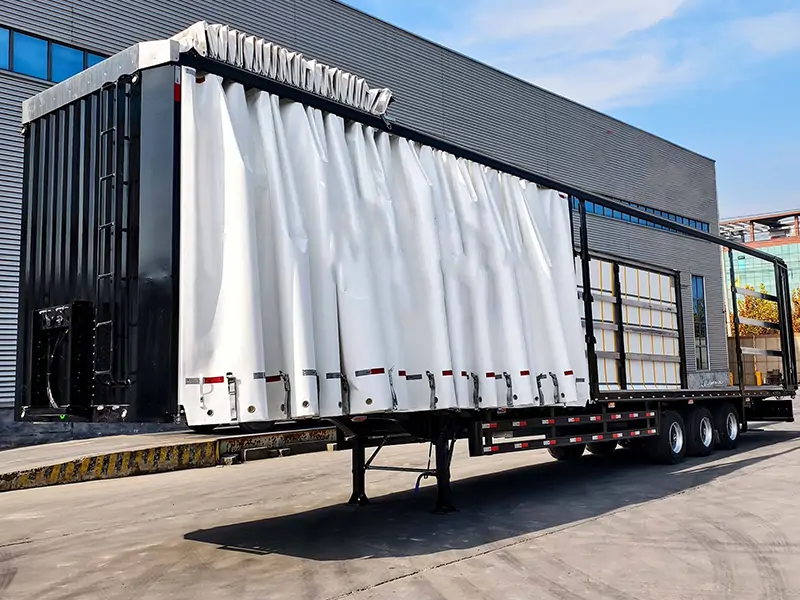
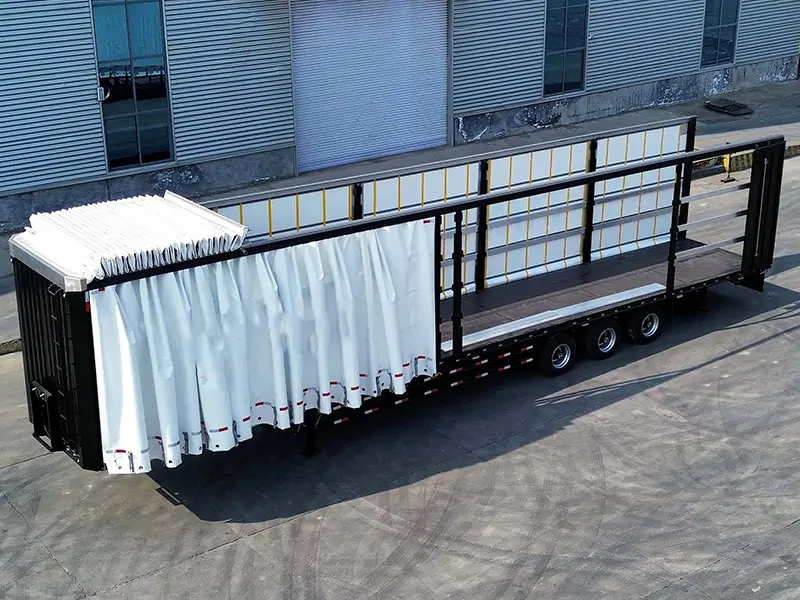
- Retractable curtains with UV-resistant PVC coatings to protect cargo from 40°C+ temperatures.
3. Operational Efficiency Enhancements
To optimize turnaround times, logistics providers leverage:
- Modular loading systems: Roll-up curtains enable 15-minute loading vs. 2 hours for traditional box trailers.
- Telematics integration: GPS and IoT sensors monitor tire pressure, axle loads, and curtain integrity in real time.
- Cross-border partnerships: Pre-negotiated permits with ZIMRA (Zimbabwe Revenue Authority) reduce clearance time by 60%.
Conclusion
By aligning with SADC regulations, adopting terrain-specific engineering, and integrating smart logistics, side curtain box semi-trailers can achieve 95%+ operational uptime in Zimbabwe, driving efficiency for regional trade corridors.