When exporting flatbed semi trailers overseas, especially to the Middle East, Africa, Southeast Asia and other long‑distance markets, shipping by container has become the most widely used method. It not only effectively reduces transportation damage, but also lowers logistics costs and shortens customs clearance time. Below is a complete explanation of how flatbed semi trailers are loaded, fixed and shipped in containers.
First of all, most standard flatbed semi trailers are detachable structures, which is the premise of container shipping. Before loading, workers will separate the main components: the main beam, side beams, floor panels, suspension system, axles, landing legs, lights and wiring harnesses. These parts are professionally disassembled, cleaned, rust‑proofed and packaged to avoid collision and friction during sea transportation. Detachable design allows large‑sized semi trailers to be split into small units that fit into standard shipping containers.
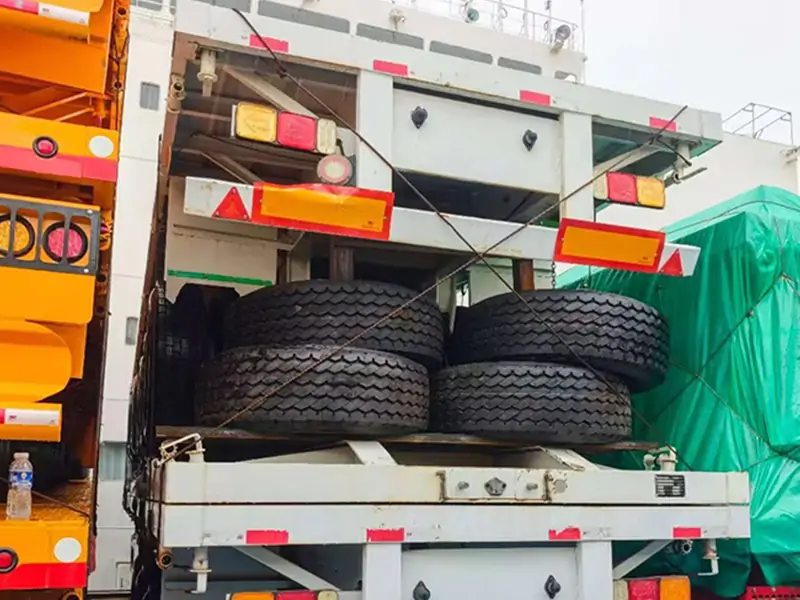
Secondly, choosing the right container is critical. Usually, 40ft high‑cube containers (40HC) or 40ft standard containers (40GP) are used. A single 40HC container can hold most parts of one standard flatbed semi trailer. For some short or light‑duty models, it is even possible to arrange component combination loading to improve space utilization. Before packing, workers make detailed packing plans to ensure weight balance and space efficiency, avoiding overweight or unstable center of gravity.
Fixation and protection are the key steps to ensure safe delivery. All metal parts are coated with anti‑rust oil and wrapped with plastic film or bubble wrap. Wooden bases, steel brackets and straps are used to fix each component firmly inside the container. No shaking or sliding is allowed during long‑distance navigation. Especially for vulnerable parts such as axles, suspension and landing legs, extra cushioning and reinforcement are required to prevent deformation or damage.
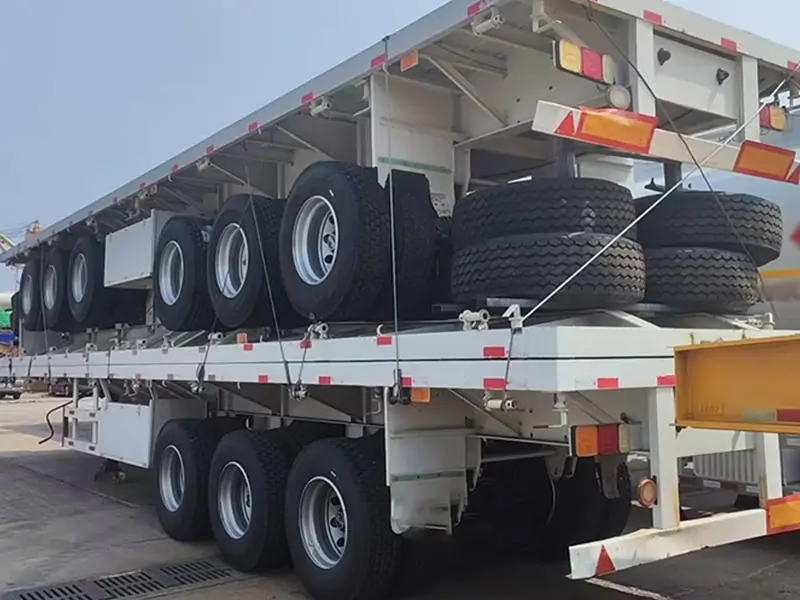
Before the container is sealed, a full inspection will be carried out: checking the quantity of parts, fastening condition, moisture‑proof measures and labeling. Each container is attached with a packing list, marking the item name, quantity, weight and position, which is convenient for customers to unload, check and install after arrival.
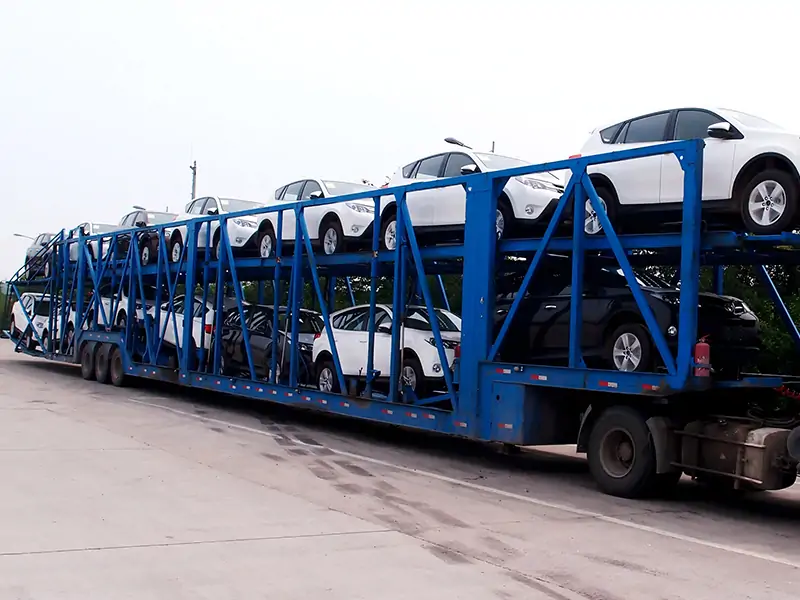
After the container arrives at the destination port, the importer or dealer can unload the parts and carry out on‑site assembly. Experienced technicians or installation guidance from the factory can complete the assembly in a short time. Compared with the traditional RORO (roll‑on/roll‑off) transportation, container shipping greatly reduces the risk of scratch, collision and loss, and is more suitable for long‑distance bulk export.
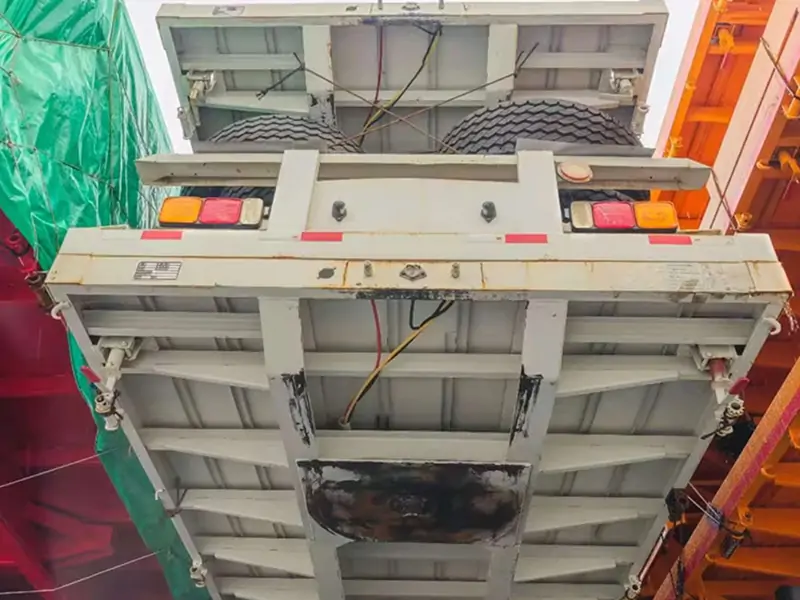
In conclusion, shipping flatbed semi trailers by container relies on detachable design, reasonable container selection, firm fixation and professional packaging. This method has become the preferred logistics plan for semi trailer manufacturers and exporters. For buyers in Saudi Arabia, Nigeria, Kenya, UAE and other countries, container transportation ensures that the trailers arrive in intact condition, bringing better purchasing experience and lower after‑sales trouble.