I. Agricultural Applications: Efficiency and Product Protection
1. Ventilation and Humidity Control for Fresh Produce
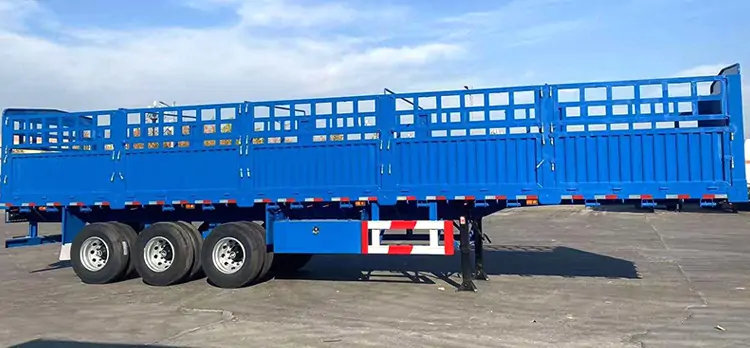
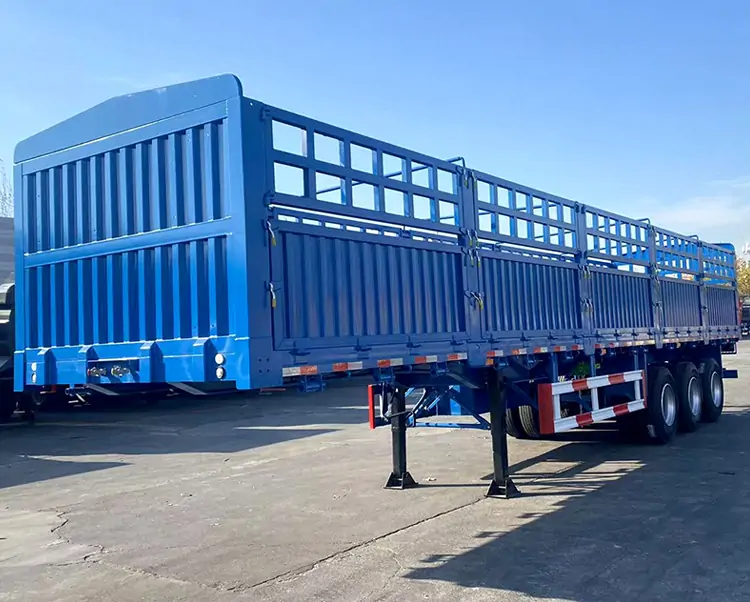
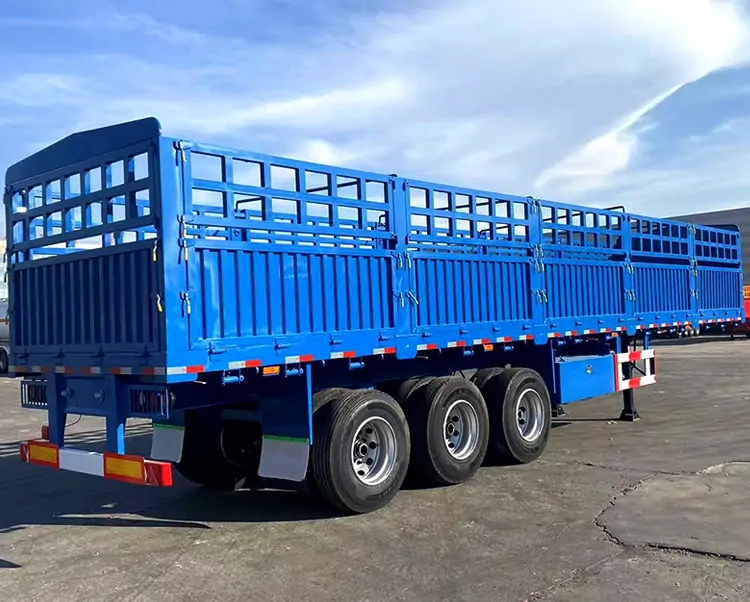
Flower-fence semi-trailers feature an open-frame design with strategically spaced metal tubes, creating natural airflow channels that reduce interior temperature and humidity by up to 40% compared to enclosed trailers. This is critical for transporting perishable goods like fruits, vegetables, and flowers, minimizing spoilage rates to below 6% of industry averages. Adjustable side panels (height range: 0.5–2.5m) accommodate varying cargo sizes, while waterproof tarpaulin systems ensure protection against rain, making them ideal for multi-climate operations.
2. Lightweight yet Durable Construction
Built with high-strength steel (e.g., T700 manganese plates) and aluminum alloys, these trailers achieve a tare weight of ≤7 tons for 13-meter models—15% lighter than traditional box trailers. This weight reduction allows an additional 1.5 tons of payload per trip, directly boosting profitability. Low-deck gooseneck designs lower cargo platforms to 1.2m, reducing manual loading time by 30% when paired with wide-opening rear gates, a key advantage for short-haul distribution.
3. Customization for Diverse Cargo Types
To handle fragile or irregularly shaped agricultural products, manufacturers offer tailored modifications:
- Shock-Absorption Systems: EVA foam linings and independent suspension reduce vibration impact by 60% for egg or glass bottle transport.
- Modular Partitioning: Removable dividers optimize space for seedlings or potted plants, preventing shifting during transit.
- Temperature Monitoring: IoT sensors track real-time conditions, triggering alerts if humidity exceeds 85% or temperatures deviate from 2–8°C for cold-chain goods.
II. Livestock Transport: Safety and Animal Welfare
1. Multi-Tier Loading Systems for Maximized Capacity
Specialized livestock trailers employ hydraulic double- or triple-deck platforms, enabling independent layer adjustment via electric motors. A 15.5m model can carry 60 adult cattle (20 per deck) or 180 sheep, tripling capacity versus single-deck designs. Anti-slip flooring (R10-rated rubber mats) and crash-resistant partitions (15cm spacing) prevent injuries, while side ramps facilitate safe boarding/disembarking.
2. Climate Control and Health Monitoring
Long-haul animal transport demands strict environmental management:
- Ventilation: High-capacity fans (≥3,000m³/h airflow) maintain oxygen levels ≥19.5% and ammonia ≤20ppm.
- Temperature Regulation: Automatic HVAC systems keep compartments at 15–25°C, adjustable per animal species (e.g., 18°C for pigs, 22°C for poultry).
- Hygiene Systems: UV disinfection lamps and pressure-spray nozzles enable on-route sanitation, reducing disease transmission risks.
3. Compliance with Global Safety Standards
Livestock trailers adhere to ISO 27956:2020 and EU Council Regulation (EC) No 1/2005, featuring:
- Structural Integrity: Side panels withstand 1,000kg lateral impact forces without deformation.
- Braking Performance: EBS (Electronic Braking System) cuts stopping distance by 20% under full load (100 tons).
- Tracking Technology: GPS and AI-powered cameras monitor animal behavior, detecting distress signals (e.g., prolonged lying down) to alert drivers.
III. Industry Trends: Innovation Driving Efficiency
1. Advanced Material Science
The shift to 700L high-strength steel and 6061-T6 aluminum reduces tare weight to 6.8 tons for 100-ton-capacity models, improving fuel efficiency by 12% per 100km.
2. Smart Connectivity
5G-enabled T-Box terminals transmit real-time data (location, cargo status, vehicle diagnostics) to cloud platforms, enabling predictive maintenance and route optimization. For example, DAF’s PACCAR MX-13 engine integration reduces idle fuel consumption by 8%.
3. Modular Versatility
Quick-release side panels allow rapid conversion between livestock, agricultural, and general cargo modes. Some models add refrigeration units (−25°C to +25°C) for dual-purpose cold-chain and dry goods transport, extending asset utilization rates by 40%.
Conclusion
Flower-fence semi-trailers represent a convergence of engineering precision and industry-specific customization, addressing the unique challenges of agriculture and livestock logistics. As regulations tighten and sustainability demands grow, innovations in lightweighting, IoT integration, and modular design will continue to redefine their role in global supply chains, ensuring food security and animal welfare in the decades ahead.