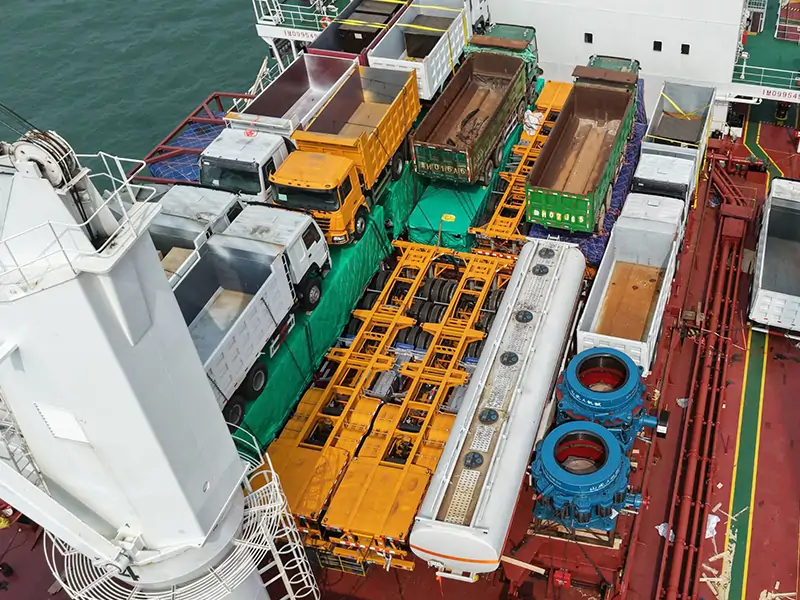

















Shipping skeletal semi-trailers via containers is an efficient, cost-effective method for international logistics, especially for manufacturers and traders targeting global markets. This process combines the versatility of skeletal trailers with the stability of container shipping, ensuring safe and smooth delivery. Below is a step-by-step guide to the entire shipping process, tailored for practical operation.
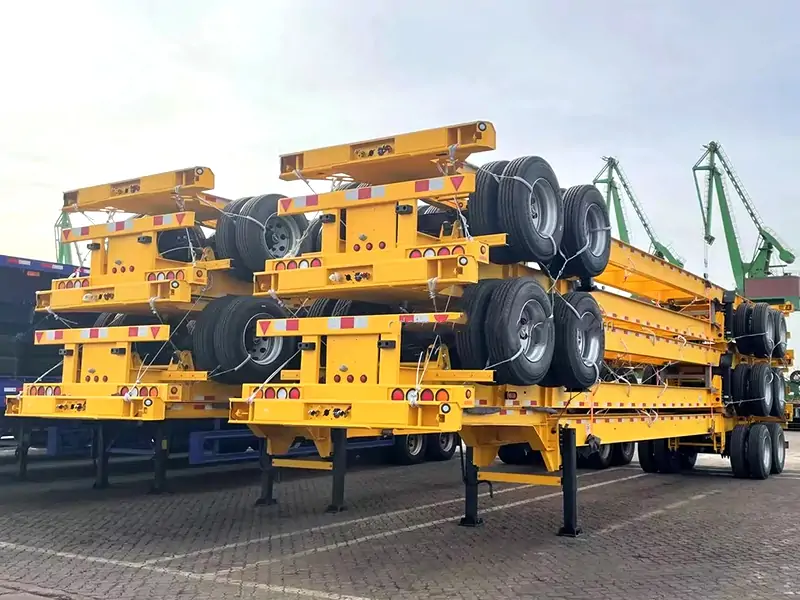
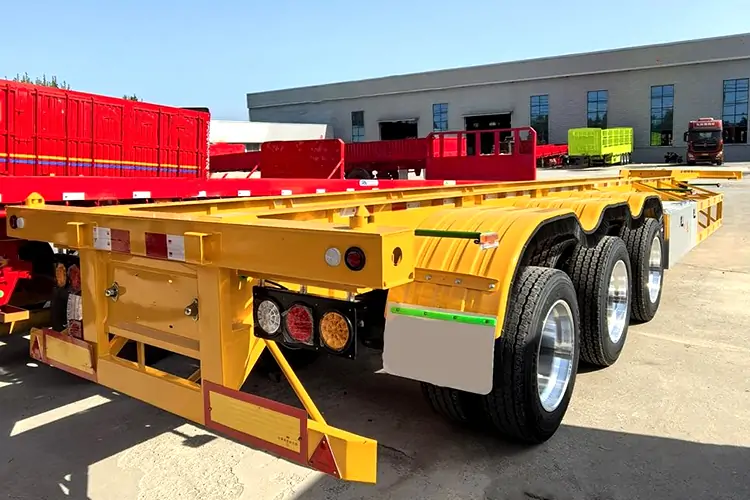
First, select the right container type and skeletal trailer specification. Standard 20ft or 40ft containers are most commonly used, matching the length of mainstream skeletal semi-trailers. Ensure the trailer’s weight and dimensions comply with container loading limits—tri-axle skeletal trailers are preferred for their better weight distribution, suitable for heavy-duty container transport. Check the trailer’s twistlocks to ensure they can securely lock the container, preventing shifting during transit.
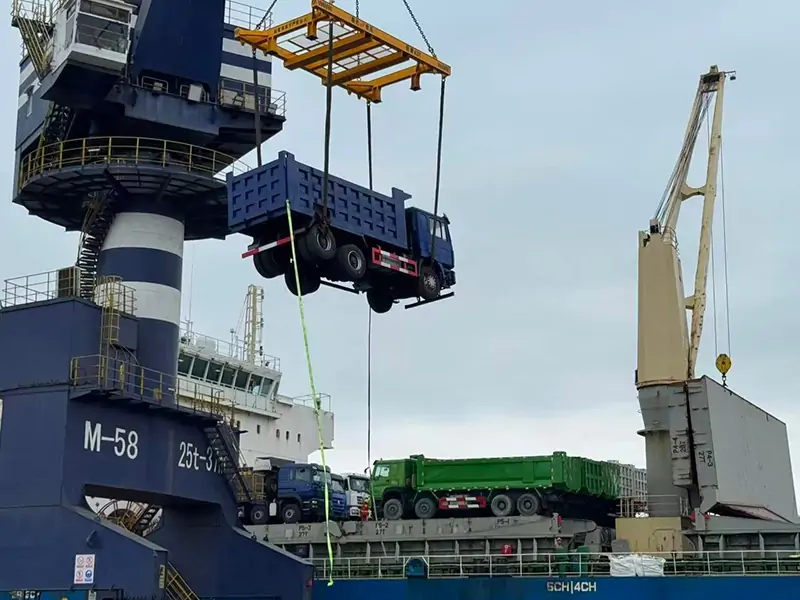
Next, complete loading and securing. Use a crane or forklift to place the container onto the skeletal trailer, aligning it with the twistlocks for firm locking. Inspect the container’s seal and structure to avoid damage or leakage. For long-distance shipping, add additional securing devices to enhance stability, meeting international shipping safety standards.

Then, handle customs clearance and booking. Prepare necessary documents, including commercial invoice, packing list, and export declaration. Cooperate with a reliable freight forwarder to book container shipping space, choosing between roll-on/roll-off (Ro-Ro) or bulk ship based on needs—Ro-Ro is more efficient for wheeled cargo like skeletal trailers. Confirm the departure port (e.g., Qingdao) and destination port, and clarify shipping schedules.
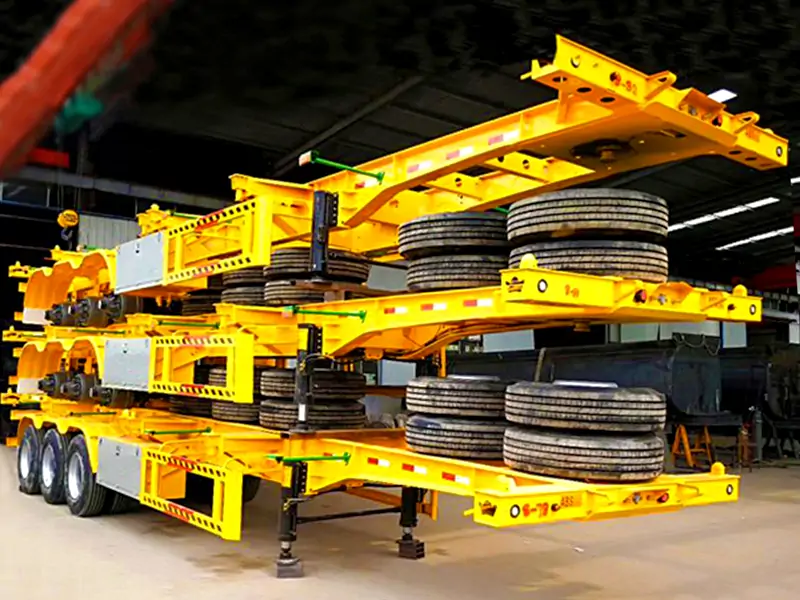
Finally, arrange inland transportation and port handover. Transport the loaded skeletal trailer to the port via a tractor, ensuring on-time arrival. After port inspection, the container will be loaded onto the ship. Track the shipment in real time to timely handle any potential issues. Upon arrival at the destination port, complete customs clearance and arrange for the trailer to be picked up and delivered to the final location.
Following these steps ensures the safe, efficient shipment of skeletal semi-trailers using containers, reducing logistics costs and improving delivery reliability for global trade.