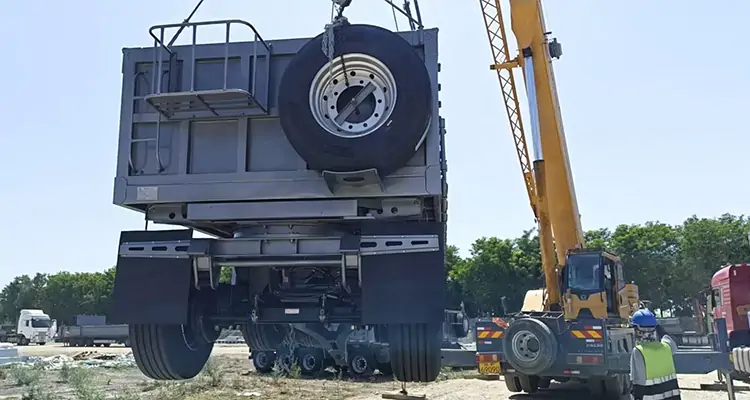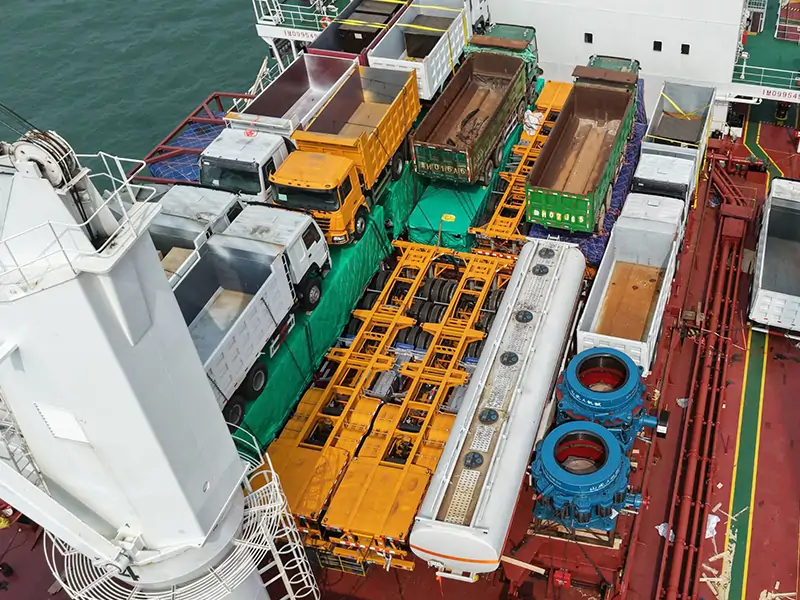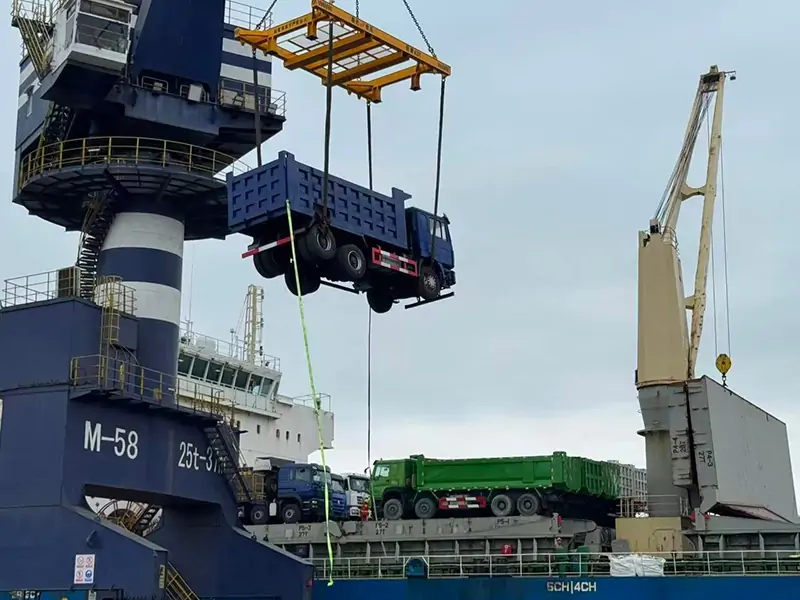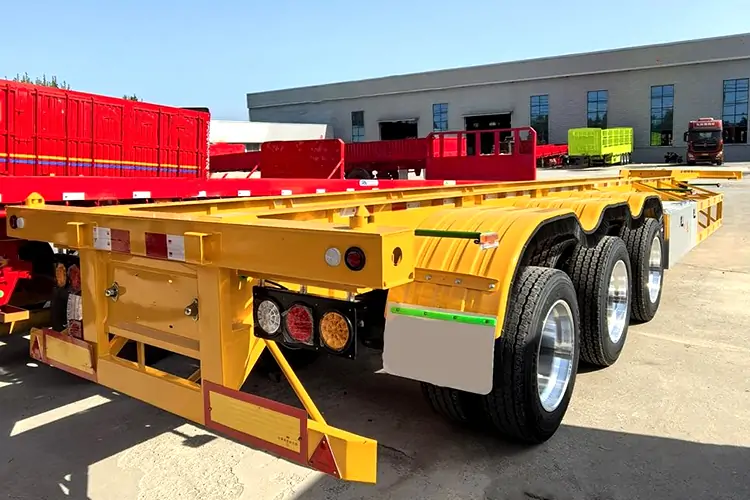

















The operational workflow involves loading the cargo bed at origin points such as quarries or ports, followed by secure fastening using adjustable side panels and tension straps. Upon arrival at destinations, the hydraulic system lifts the cargo bed at a 45–60° angle, allowing gravity-assisted discharge through the rear opening. This method eliminates manual handling, reducing labor costs by 30–40% compared to traditional side-dumping models.
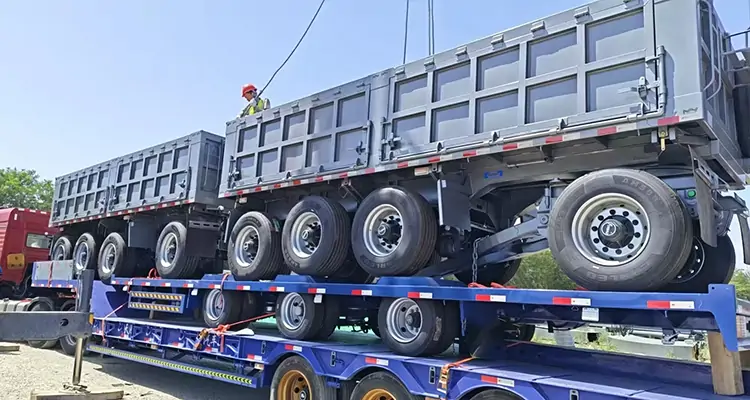
Guinea’s rugged terrain demands robust chassis designs. Most operators deploy tri-axle configurations with air suspension systems to enhance stability during unloading on uneven surfaces. Additionally, corrosion-resistant steel frames and dust-proof seals are standard to combat the country’s humid tropical climate.
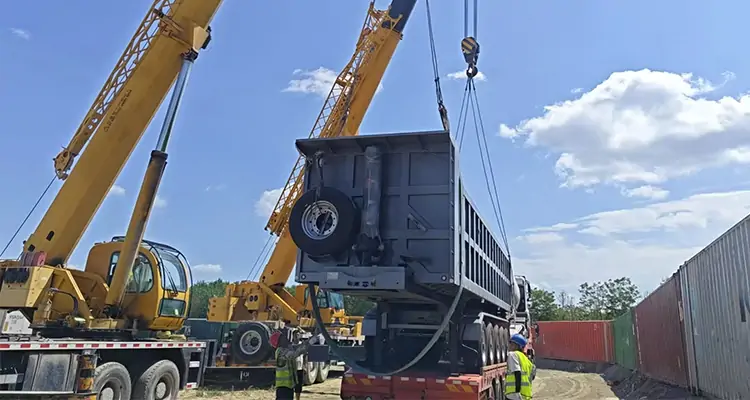
Regulatory compliance remains a priority, with vehicles adhering to ECOWAS (Economic Community of West African States) road safety standards. Operators must secure permits for oversized loads when transporting heavy machinery components via these semi-trailers.