
















Structural Design: Engineering for Efficiency
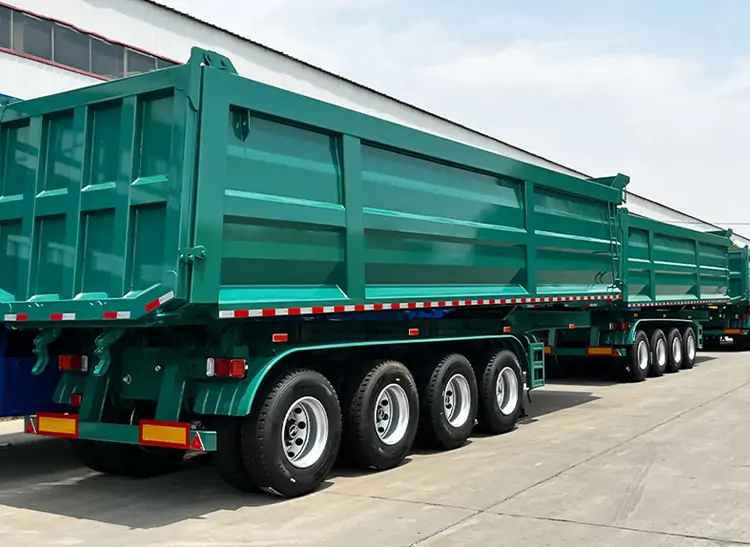
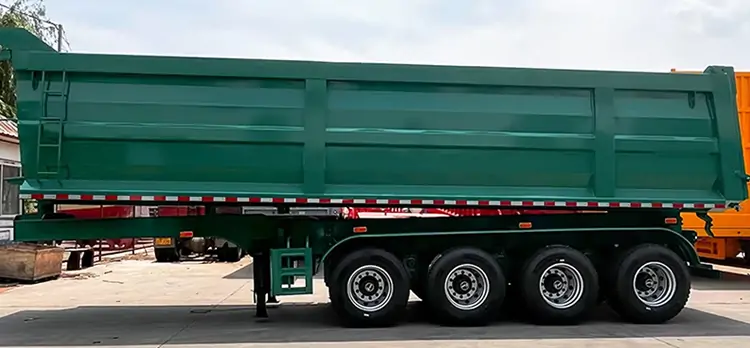
U-type rear-discharge semi-trailers are distinguished by their U-shaped cargo compartments, which feature a curved bottom and streamlined sidewalls. This design eliminates the rigid frame structure found in traditional rectangular trailers, reducing deadweight by up to 1.5 tons while maintaining structural integrity. The arc-shaped bottom lowers the vehicle’s center of gravity by 20–30%, enhancing stability during high-speed travel or sharp turns—a critical factor for transporting bulk materials like ores, gravel, and concrete.
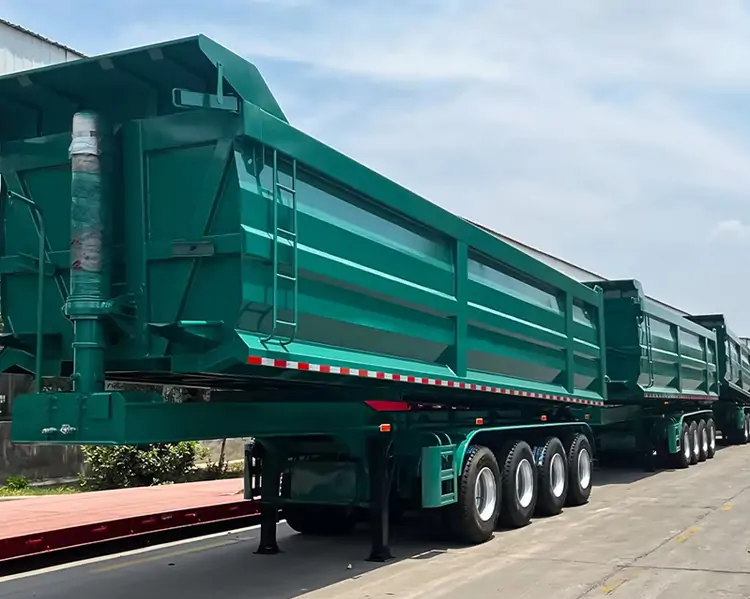
Key Technical Specifications:
- Material: High-strength steel (e.g., T700 manganese plates) or aluminum alloys for lightweight durability.
- Dimensions: Customizable lengths (10–16 meters) and widths (2.5–3.2 meters) to accommodate varying cargo volumes.
- Load Capacity: Ranges from 60 to 100 tons, depending on axle configurations (e.g., 4-axle models for ultra-heavy loads).
- Discharge Mechanism: Hydraulic lifting systems enable rear tilting up to 55°, ensuring rapid unloading with minimal residue (residual rate <1%).
Applications in Engineering Infrastructure
- Mining Operations
In open-pit mines, U-type trailers transport iron ore, coal, and bauxite from extraction sites to processing plants. Their U-shaped compartments prevent material from sticking to corners, reducing cleaning time by 40% compared to rectangular trailers. For instance, a 2025 case study in Australia’s Pilbara region demonstrated that U-type trailers cut unloading cycles from 15 to 8 minutes per load, boosting daily throughput by 35%. - Construction Sites
These trailers excel in delivering bulk materials like sand, gravel, and ready-mix concrete to construction zones. The low-center-of-gravity design minimizes tipping risks on uneven terrain, while the rear-discharge system allows direct pouring into concrete mixers or foundation pits. A 2024 project in Dubai’s Expo City used U-type trailers to transport 12,000 tons of aggregate daily, achieving a 25% reduction in labor costs due to faster unloading. - Infrastructure Development
For large-scale projects such as highway construction or dam building, U-type trailers facilitate the movement of earthwork and crushed stone. Their compatibility with excavators and loaders enables seamless loading/unloading workflows. In China’s Belt and Road Initiative, these trailers have been instrumental in transporting materials across remote regions, with some models featuring reinforced suspensions to withstand rugged terrains.
Technological Innovations Driving Adoption
- Lightweighting and Durability
Manufacturers are increasingly using advanced materials like Swedish-imported high-strength steel (yield strength ≥700 MPa) to reduce tare weight without compromising payload capacity. For example, a 13-meter U-type trailer optimized with such materials can weigh as little as 6.2 tons—1.8 tons lighter than conventional models—while carrying 98 tons of cargo. - Smart Connectivity
Integration of IoT sensors enables real-time monitoring of cargo weight, tire pressure, and hydraulic system health. Fleet operators can track vehicle locations via GPS and receive alerts for maintenance needs, reducing downtime by up to 20%. Some models also feature automated discharge controls, allowing drivers to adjust tilting angles remotely for precision unloading. - Environmental Compliance
To meet stricter emissions regulations, manufacturers are developing electric and hybrid U-type trailers. These models use regenerative braking systems to recover energy during unloading, cutting fuel consumption by 15–20%. Additionally, noise-reduction technologies (e.g., silent hydraulic pumps) make them suitable for urban construction sites with strict environmental controls.
Market Trends and Sales Strategies
The global U-type rear-discharge semi-trailer market is projected to grow at a CAGR of 6.8% through 2030, driven by infrastructure investments in Asia, Africa, and Latin America. Sales strategies should focus on:
- Customization: Offering tailored solutions for specific cargo types (e.g., anti-corrosion coatings for chemical transport).
- After-Sales Support: Providing spare parts networks and training programs for local maintenance teams.
- Sustainability Messaging: Highlighting fuel efficiency and emissions reductions to appeal to eco-conscious clients.
Conclusion
U-type rear-discharge semi-trailers represent a fusion of engineering precision and industry-specific customization, addressing the unique challenges of engineering infrastructure logistics. As governments worldwide prioritize infrastructure development and sustainability, these vehicles are poised to play an even more pivotal role in shaping the future of material transportation. For sales professionals, understanding their technical nuances and market potential is key to capitalizing on this growing segment.